Partial solar eclipse of 27 February 2036
By David Turner · Last updated 2026-11-23
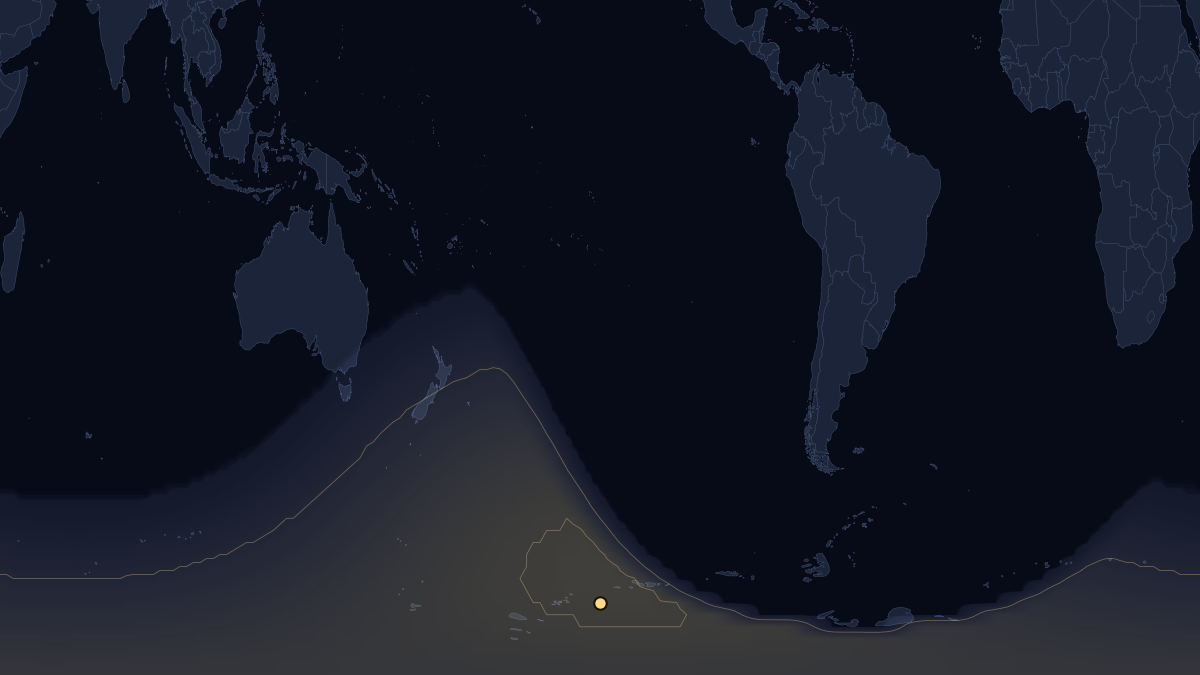
The partial solar eclipse of 27 February 2036 will be seen mainly from Australia and New Zealand. Nowhere sees a total eclipse. At most 52% of the Sun is covered, near 77°S, 137°W.
| Type | Partial solar eclipse |
|---|---|
| Date | 27 February 2036 |
| Greatest eclipse | 05:41 UTC |
| Deepest eclipse | 52% of the Sun covered |
| Big towns in the central path | none (no central path) |
| Countries that see some eclipse | 2 |
How much of the Sun is covered in major cities?
The biggest cities that see at least some eclipse, with the deepest moment.
| City | Sun covered | Deepest (UTC) | Sun height |
|---|---|---|---|
| Sydney, Australia | 1% | 05:57 | 32° |
| Melbourne, Australia | 2% | 05:44 | 38° |
| Auckland, New Zealand | 14% | 06:00 | 12° |
Which countries can see it?
Some eclipse is visible from 2 countries with a town of 50,000 or more. The deepest: New Zealand (23%) and Australia (7%).
How do you watch it safely?
Never look at the Sun directly, even when most of it is covered. Use eclipse glasses that meet ISO 12312-2, or a pinhole projector. An annular or partial eclipse never covers the whole Sun, so the glasses stay on the whole time.
Open it on the live mapCite this page: “Partial solar eclipse of 27 February 2036”, Atlas of the Cosmos, updated 2026-11-23, https://www.atlasofthecosmos.com/eclipses/2036-02-27-solar. The figures are also data (JSON).
Sources: NASA/JPL Horizons positions of the Sun and Moon, our own shadow geometry, Natural Earth borders and towns of 50,000 or more. Reuse under CC BY 4.0 with credit to Atlas of the Cosmos. About the data · All eclipses